
Soil Carbon Gains in Northern KwaZulu-Natal
The uMkhanyakude Restoration Project
Rewild Capital. with The Munywana Conservancy
In short: After five years of direct field measurements from within the uMkhanyakude Restoration Project in KwaZulu-Natal, the evidence is encouraging: grass biomass, veld condition, and fire all enhance soil carbon. Recently burned stations hold about 10 tonnes more carbon per hectare than long-unburnt ones. Actively encroaching sites, where young mid-storey bush is thickening, hold 12–15 tonnes less carbon per hectare than open veld or mature woodland. Five years of consistent monitoring across 55 stations have transformed assumptions about fire, grass, and carbon into measurable results.
The essential question for rangeland managers is whether better habitat condition means more carbon stored in the soil.
After five years of direct field measurements from within the uMkhanyakude Restoration Project in KwaZulu-Natal, the evidence is encouraging: grass biomass, veld condition, and fire all enhance soil carbon.
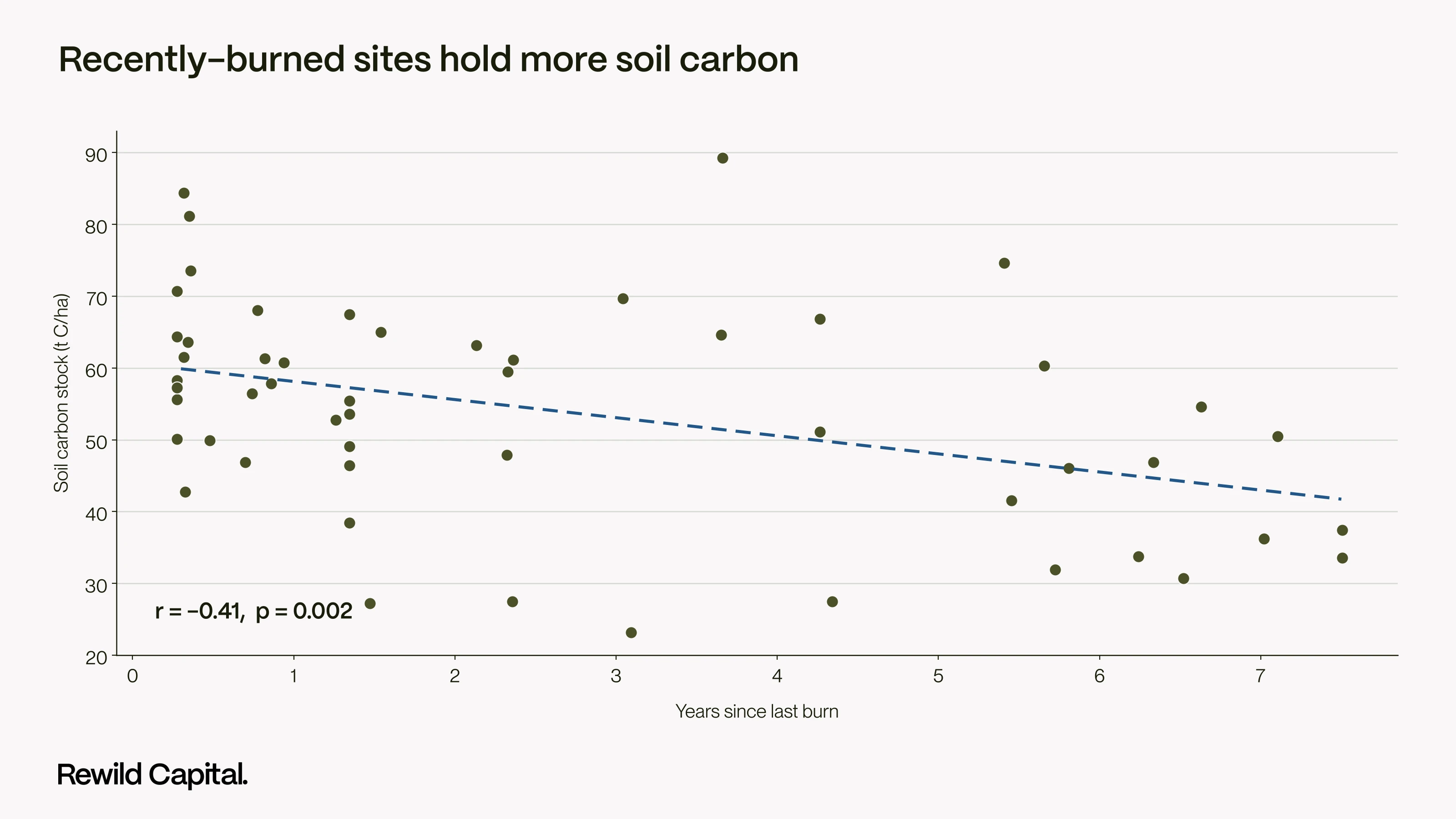
Does regular burning store more soil carbon?
Recently burned stations hold about 10 tonnes more carbon per hectare than long-unburnt ones. As fire return intervals grow longer, soil carbon declines. Burning at the right intervals keeps the grass layer healthy and productive, and stores more carbon in the soil.
Does more grass mean more soil carbon?
Soil carbon rises with grass biomass and veld condition. It's not just the amount of grass linked to more soil carbon, but also the quality: the better the veld condition score — which reflects the proportion of palatable and perennial grass species — the more carbon is stored.

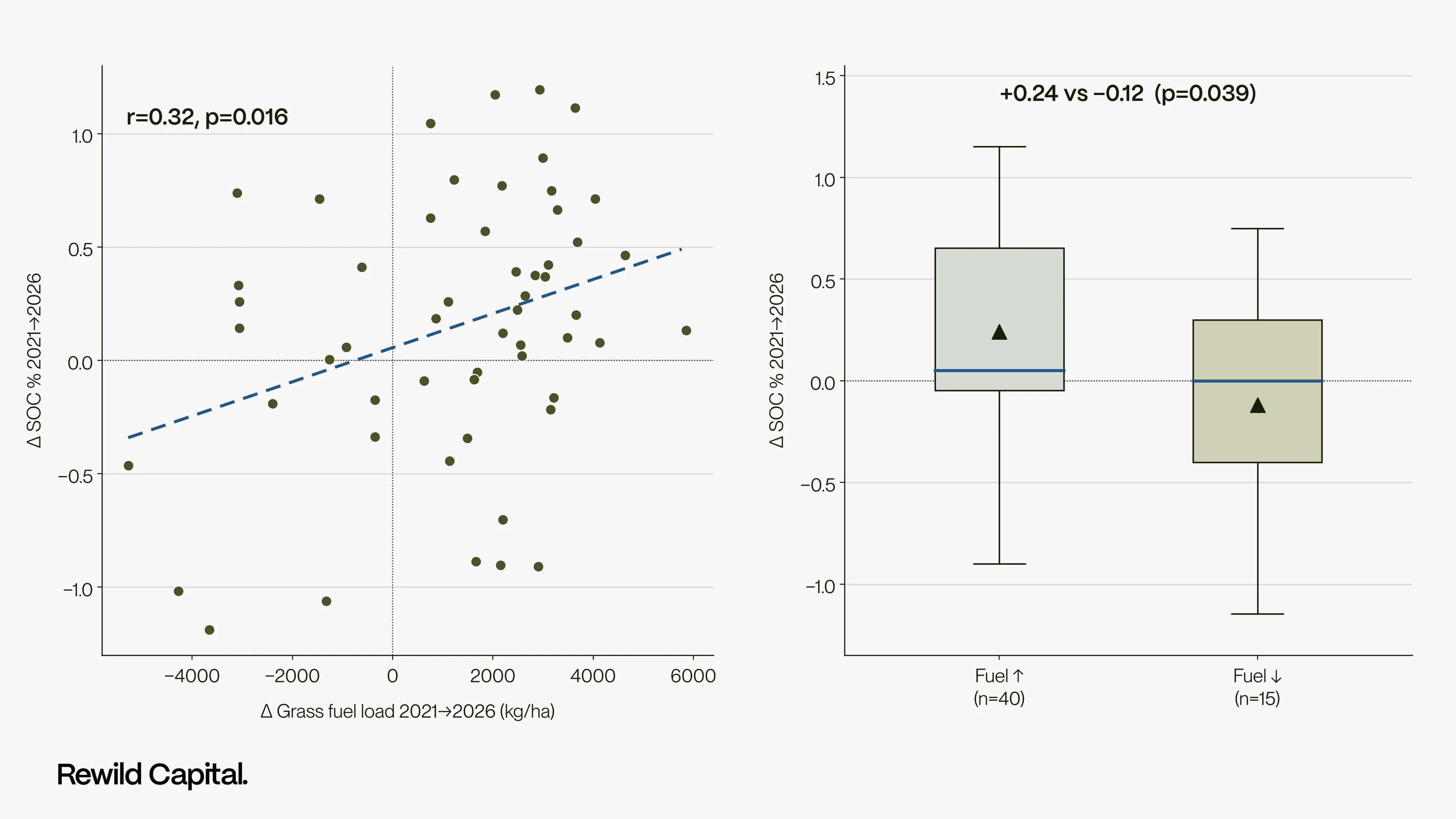
The change over time confirms it
At the same stations, sites where grass biomass increased between 2021 and 2026 gained soil carbon; sites that declined in grass cover lost carbon. This clear pattern exists because the network has been measured the same way every year.
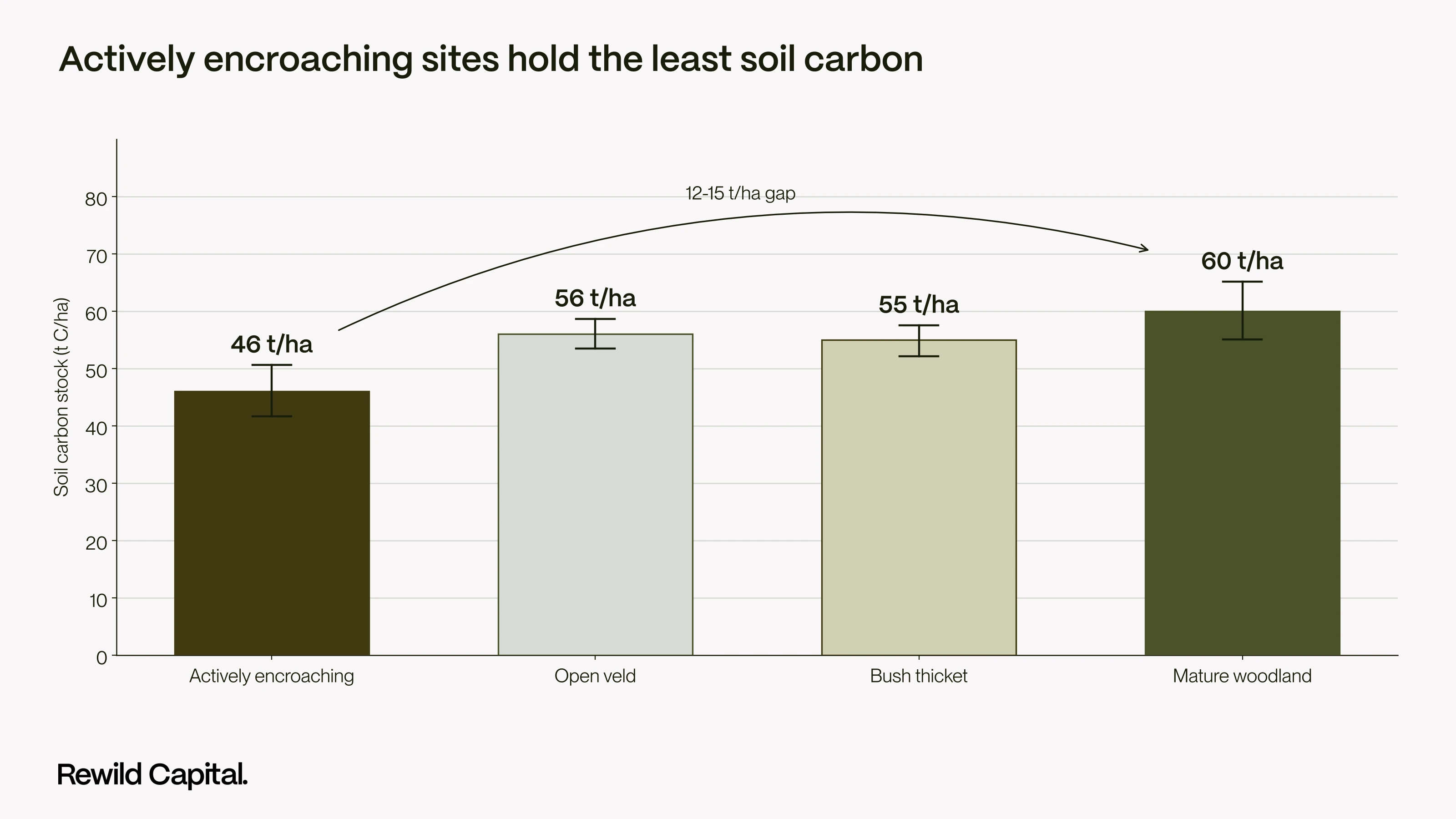
Can bush thinning increase soil carbon?
Actively encroaching sites, where young mid-storey bush is thickening, hold 12–15 tonnes less carbon per hectare than open veld or mature woodland. Crucially, mature trees are not the problem. Thinning should target dense stands of encroachers and, where appropriate, encourage the formation of open woodland.
Turning Measurement into Management
These results demonstrate that the core tools of rangeland management—fire, grazing, and bush-thinning—are effective natural climate solutions. Importantly, these approaches do not require reserves to adopt unfamiliar interventions. Instead, they reinforce the value of established practices: burning at appropriate intervals, managing grazing pressure, and thinning encroaching bush, all while monitoring outcomes consistently to demonstrate their impact.
Five years of consistent monitoring across 55 stations have transformed assumptions about fire, grass, and carbon into measurable results.

