The uMkhanyakude Restoration Project in KwaZulu-Natal is restoring a vital part of the Maputaland-Pondoland-Albany corridor, a globally significant biodiversity area. Working with local communities, land stewards, and conservation managers, the project applies fire and grazing management and bush-thinning to support grassland recovery.
Download the project files here
To advance restoration across the landscape, a soil carbon project is underway at the Munywana Conservancy, the project’s pilot site. Munywana, previously used for agriculture, has been restored through rewilding. In 2025, a carbon project was launched to unlock and sustain funding for ecological restoration at scale. The project integrates fire and grazing management with bush clearing and grassland restoration to increase nature-based carbon sequestration and generate soil carbon credits while supporting Munywana’s biodiversity and local communities.
The project aims to restore ecosystem function and increase the carbon sink capacity of grasslands through four linked interventions: optimising fire regimes, reducing grazing pressure, clearing invasive bush, and producing biochar. These actions benefit the landscape even without carbon credits. Carbon revenue ensures financial sustainability.
Five years of field measurements in the uMkhanyakude Restoration Project show clear results. Grass biomass, veld condition, and fire each contribute to higher soil carbon. Recently burned sites hold about 10 tonnes more carbon per hectare than those unburned for long periods. Sites with active bush encroachment hold 12 to 15 tonnes less carbon per hectare than open veld or mature woodland. Consistent monitoring across 98 stations has turned assumptions about fire, grass, and carbon into measurable outcomes. These efforts deliver ecological gains and create new market opportunities for livestock and wildlife products, directly linking restoration to improved livelihoods for people in the region.
Kavango‑Zambezi Transfrontier Conservation Area (KAZA) is one of the world’s largest transboundary conservation areas, spanning Angola, Botswana, Namibia, Zambia and Zimbabwe. Its forests, grasslands, wetlands and savannas support rich wildlife and human communities, but land degradation driven by human activities and environmental pressures now threatens the region’s ecological integrity.
Read more
SANParks Feasibility Study
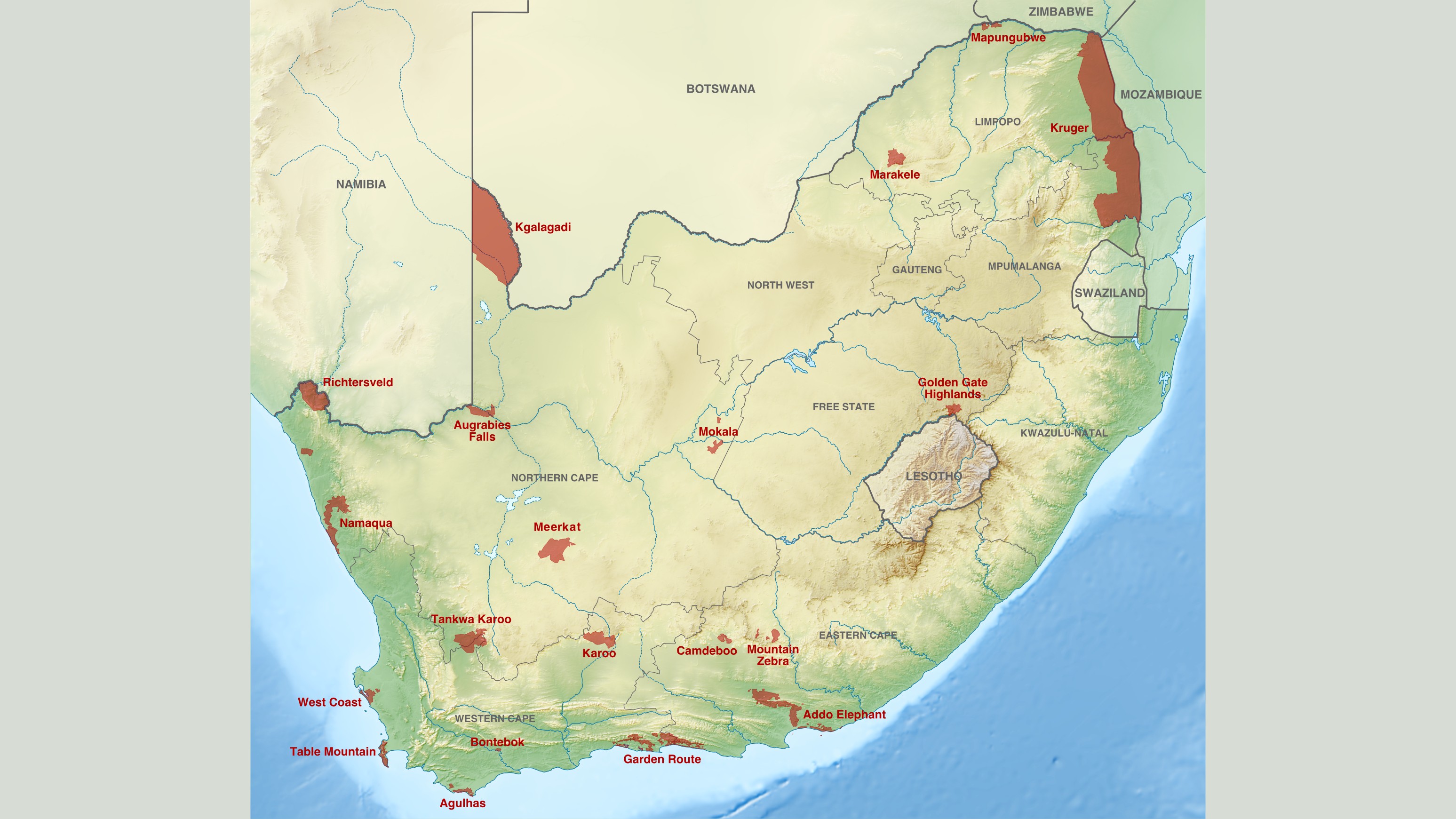
SANParks protects South Africa’s biodiversity through 21 national parks—including three World Heritage sites and ten marine protected areas—covering over 4 million ha on land and ~370,000 ha at sea. These parks comprise about 70% of state terrestrial protected areas and 22% of state‑managed marine areas, with five parks part of transfrontier conservation areas with neighbouring SADC countries.
Read more
Singita Expansion Project
Singita’s lodges embody a reverence for nature and a commitment to memorable, conservation‑led experiences. Originating nearly a century ago with a 30,000‑acre Lowveld property that became part of Sabi Sand, the vision expanded across four countries while preserving a single purpose: to conserve wilderness and its wildlife.